


<article>
Understanding Cryptocurrency: What Are the Key Risks and Rewards of Investing Today?

Cryptocurrency investments encompass massive market capitalization—over $3.2 trillion—and promise transformative returns, yet they pose significant challenges for sophisticated investors. In this guide, you’ll gain a balanced view of the key risks and rewards of investing in cryptocurrency today, explore how digital asset management solutions from Vegax Holdings can mitigate threats and amplify opportunities, and map current trends shaping the crypto landscape. We’ll examine market volatility, regulatory uncertainty, security vulnerabilities, liquidity constraints, custody risks, growth potential, diversification benefits, decentralization innovations, global accessibility, staking and lending rewards, tailored institutional offerings, and the future outlook—all in one cohesive framework.
What Are the Main Risks of Investing in Cryptocurrency Today?
How Does Market Volatility Affect Cryptocurrency Investments?


High market volatility in cryptocurrencies arises from decentralized trading and speculative sentiment, causing price swings exceeding 10 percent in a single day and exposing investors to swift value changes. Volatility reflects shifts in demand, macroeconomic news, and network activity, and it can erode portfolio value or trigger margin calls without warning. Key drivers include:
- Rapid sentiment shifts following regulatory announcements
- Thin order books on niche coins amplifying price moves
- Algorithmic trading and flash crashes
By understanding these volatility triggers, investors can implement tactical rebalancing and hedging strategies to protect capital while positioning for recoveries.
Market Volatility in Cryptocurrency
Cryptocurrency markets are known for their high volatility, with price swings often exceeding 10% in a single day. This volatility stems from various factors, including decentralized trading, speculative sentiment, and rapid shifts in demand influenced by news and network activity.
This research supports the article’s discussion of market volatility as a key risk factor in cryptocurrency investments.
What Regulatory Uncertainties Should Investors Be Aware Of?
Regulatory uncertainty in cryptocurrency stems from evolving global frameworks, divergent tax treatments, and unclear security classifications that can disrupt trading and compliance. Governments may impose licensing requirements, reporting obligations, or outright bans, affecting exchange access, asset listing, and institutional participation. Common challenges include:
- Jurisdictional discrepancies in “security” vs. “commodity” definitions
- Evolving anti-money-laundering (AML) and know-your-customer (KYC) mandates
- Taxation ambiguity for staking rewards and airdrops
Navigating regulatory landscapes demands proactive monitoring and adaptive compliance frameworks to reduce enforcement risk and maintain operational continuity.
Regulatory Uncertainty in Crypto
Regulatory uncertainty poses a significant challenge for cryptocurrency investors, with evolving global frameworks, divergent tax treatments, and unclear security classifications impacting trading and compliance. Governments worldwide are grappling with how to regulate digital assets, leading to potential disruptions in exchange access and institutional participation.
This citation highlights the impact of regulatory uncertainty on the cryptocurrency market, which is a key point discussed in the article.
Which Security Vulnerabilities Threaten Cryptocurrency Holdings?
Security vulnerabilities such as hacks, phishing, and smart contract exploits directly threaten cryptocurrency holdings by compromising private keys and platform integrity. Attack vectors include:
- Centralized exchange breaches (e.g., hot-wallet hacks)
- DeFi protocol vulnerabilities and reentrancy bugs
- Social engineering targeting key-management errors
Table: Security Vulnerabilities and Mitigation Strategies
Implementing layered security controls and institutional-grade custody significantly reduces these threats and secures digital assets for long-term stewardship.
How Do Liquidity Issues and Market Manipulation Impact Crypto Investments?
Limited liquidity on smaller exchanges and coordinated market manipulation can lead to sudden price distortions and execution challenges for crypto investors. Low trading depth may cause wide bid–ask spreads, while wash trading or spoofing artificially inflate volume indicators.
Key considerations include:
- Difficulty liquidating large positions without price impact
- False signals from manipulated order books
- Regulatory crackdowns on wash-trade practices
Active liquidity management—such as splitting orders across venues and employing algorithmic execution—helps maintain stability and reduce slippage.
What Are the Custody and Operational Risks in Digital Asset Management?
Custody and operational risks in digital asset management emerge from self-custody errors, third-party custody failures, and protocol vulnerabilities that can disrupt access or lead to asset loss.
A comparison of self-custody versus institutional custody:
Selecting a custody solution that combines robust insurance, regulatory oversight, and cryptographic controls ensures reliable access and asset protection under all market conditions.
What Are the Essential Rewards of Investing in Cryptocurrency?
How Can Cryptocurrency Offer High Growth Potential and Returns?
Cryptocurrency offers high growth potential due to disruptive blockchain innovations, network effect adoption, and speculative demand driving market capitalization expansion. Bitcoin’s price rose from near zero to over $60,000 within a decade, and altcoins have delivered triple-digit returns during bull cycles. Drivers of outsized returns include:
- Early participation in emerging tokens
- Protocol upgrades that increase utility (e.g., Ethereum’s EIP-1559)
- DeFi yield opportunities generating compound interest
By allocating a disciplined portion of a diversified portfolio to digital assets, investors can capture these growth dynamics while managing overall exposure.
Why Is Portfolio Diversification Important in Crypto Investments?
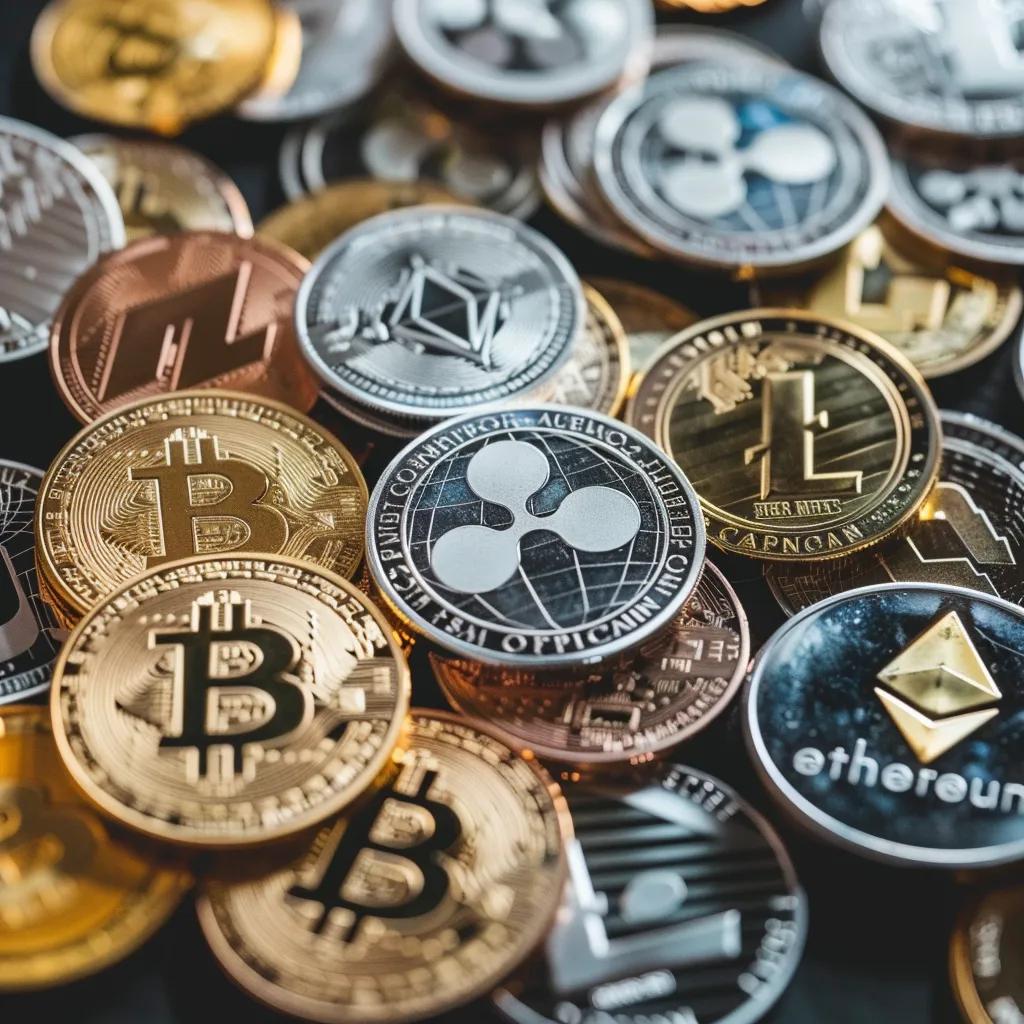

Portfolio diversification reduces overall risk by spreading capital across uncorrelated digital assets, stablecoins, tokenized real-world assets, and traditional securities. Cryptocurrency’s low correlation with equities and bonds can enhance risk-adjusted returns when integrated strategically. Benefits include:
- Smoothing volatility through asset variance
- Accessing distinct growth vectors (payment networks vs. DeFi protocols)
- Hedging against idiosyncratic token-specific events
A well-constructed digital asset portfolio balances large-cap coins, mid-cap tokens, and niche opportunities to optimize resilience and upside potential.
Benefits of Portfolio Diversification
Portfolio diversification is a crucial strategy for managing risk in cryptocurrency investments. By spreading capital across uncorrelated digital assets, stablecoins, and traditional securities, investors can potentially enhance risk-adjusted returns and mitigate the impact of market volatility.
This research supports the article’s emphasis on the benefits of diversification in crypto investments.
How Does Decentralization Drive Financial Innovation?
Decentralization leverages distributed ledger technology to remove single-point failures, democratize financial access, and enable programmable money via smart contracts. Blockchain networks support peer-to-peer lending, automated market-making, and tokenized derivatives—ushering in DeFi innovations such as:
- Automated liquidity pools and yield farming
- Decentralized identity and cross-chain interoperability
- Permissionless issuance of synthetic assets
These innovations foster a new financial infrastructure that operates 24/7 and reduces reliance on traditional intermediaries.
What Makes Cryptocurrency Accessible for Global Transactions?
Cryptocurrency facilitates borderless transactions by using decentralized networks that settle funds within minutes at minimal cost, bypassing correspondent banking and foreign exchange fees. Key attributes driving global accessibility include:
- Near-instant settlement across continents
- Programmable payment rails for micropayments and remittances
- Programmable tokens enabling cross-border compliance and reporting
This efficiency empowers businesses and unbanked populations to transact seamlessly, expanding financial inclusion worldwide.
How Can Investors Earn Crypto Rewards Through Staking and Lending?
Staking and lending protocols enable investors to earn passive income by locking digital assets to secure proof-of-stake networks or providing liquidity to DeFi platforms. Reward mechanisms include:
- Network staking yields averaging 5–15 percent APY
- Collateralized lending protocols offering variable interest rates
- Liquidity-pool incentives and token-based rewards
By participating in these mechanisms, investors can generate supplemental yield while contributing to network security and market depth.
How Can Digital Asset Management Solutions Help Navigate Cryptocurrency Risks and Rewards?
What Risk Mitigation Strategies Does Vegax Holdings Offer?
Vegax Holdings offers a suite of risk mitigation strategies that address volatility, regulatory changes, and security threats through active management and diversification:
- Dynamic rebalancing across asset classes based on volatility indicators
- Hedging using futures and options to cap downside exposure
- Continuous threat monitoring and security audits
These integrated approaches reduce drawdowns and enhance portfolio resilience in turbulent markets.
How Does Secure Digital Asset Custody Protect Investments?
Institutional-grade custody from Vegax Holdings combines cold-storage segregation, multi-signature hardware wallets, and insured vaults to safeguard client assets. Each layer of protection leverages:
- Geographically distributed vaults with armed security
- Real-time transaction monitoring and whitelisting
- Comprehensive insurance against theft and loss
This custody framework ensures uninterrupted access and peace of mind for sophisticated investors.
How Does Portfolio Optimization Enhance Crypto Investment Returns?
Portfolio optimization at Vegax Holdings employs quantitative analysis, machine-learning signals, and scenario stress-testing to tailor allocations that target specific return objectives and risk tolerances. Key elements include:
- Risk-parity models balancing volatility contributions
- Factor-based tilts toward high-growth protocols
- Custom drawdown controls aligned to investor mandates
By aligning strategy to client goals, Vegax Holdings seeks to enhance returns while maintaining disciplined risk parameters.
How Does Vegax Holdings Ensure Regulatory Compliance for Clients?
Vegax Holdings maintains compliance through continuous policy updates, rigorous KYC/AML procedures, and transparent reporting tailored to global jurisdictions. Compliance measures encompass:
- FATF and SEC regulatory framework alignment
- Automated trade reporting and tax-lot tracking
- Third-party audits and regulatory filings
This proactive compliance infrastructure reduces legal uncertainty and fosters trust with institutional stakeholders.
What Tailored Solutions Are Available for Sophisticated and Institutional Investors?
Vegax Holdings’ institutional investors benefit from bespoke services including segregated accounts, over-the-counter execution, and white-glove reporting dashboards. Service offerings feature:
- Customizable mandate structures and risk budgets
- Dedicated relationship teams and market insights
- Direct API integration for programmatic execution
These tailored services empower high-net-worth clients to navigate digital markets with precision and control.
What Are the Current Trends and Future Outlook for Cryptocurrency Investments?
How Is the Regulatory Landscape Changing for Digital Assets?
Global regulators are advancing frameworks to classify digital assets, enforce AML/CFT standards, and establish tax reporting rules. Recent developments include:
- Implementation of CARF 2.0 and CRS 2.0 guidelines in Europe
- Enhanced broker-dealer licensing requirements in the US
- Central bank digital currency (CBDC) pilots in Asia
These shifts will shape liquidity flows, institutional participation, and compliance obligations over the next five years.
What Is the Impact of Increasing Institutional Adoption?
Institutional adoption—driven by dedicated crypto funds, spot ETF filings, and corporate treasury allocations—adds market stability, deepens liquidity, and legitimizes digital assets as an asset class. Effects include:
- Narrower bid–ask spreads on major coins
- Improved custody and prime-broker services
- Heightened analytic coverage and price discovery
Institutional entry underpins a maturing ecosystem with robust infrastructure and risk controls.
Which Emerging Technologies Are Shaping the Crypto Market?
Emerging technologies such as decentralized identity (DID), Layer 2 scalability solutions, and tokenized real-world assets are redefining digital finance by:
- Reducing transaction fees and confirmation times
- Enabling cross-chain asset portability
- Tokenizing equities, commodities, and real estate
These innovations promise to expand on-chain utility and integrate blockchain into mainstream finance.
What Are the Long-Term Investment Perspectives for Digital Assets?
Long-term investment in digital assets hinges on network adoption, protocol governance models, and macro trends such as inflation hedging. Perspectives include:
- Bitcoin as a store-of-value asset analogous to digital gold
- Ethereum and smart-contract platforms powering decentralized applications
- Interoperable Layer 1 and Layer 2 networks driving scalable ecosystems
Investors positioning for multiyear cycles can harness these foundational trends for sustained growth.
How Can Investors Effectively Manage Cryptocurrency Investment Risks?
What Are Proven Strategies to Manage Crypto Market Volatility?
Investors manage volatility through disciplined techniques such as:
- Dollar-cost averaging to smooth entry points
- Volatility-adjusted position sizing based on realized variance
- Protective put options on major tokens
These tactics help stabilize returns and limit drawdowns during rapid price swings.
How Can Investors Protect Against Security Threats and Hacks?
Robust security practices include:
- Storing assets in multi-signature cold wallets under segmented access controls
- Rotating key managers and enforcing strict permission settings
- Conducting periodic penetration tests and threat-intelligence reviews
A layered security posture reduces attack surfaces and preserves asset integrity.
How Does Regulatory Compliance Reduce Investment Uncertainty?
Staying ahead of regulatory developments by:
- Subscribing to official regulator feeds and legal advisories
- Implementing real-time transaction monitoring and reporting
- Engaging external counsel for cross-border interpretations
Proactive compliance aligns operations with evolving rules and mitigates enforcement risk.
What Role Does Liquidity Management Play in Crypto Investments?
Effective liquidity management balances market impact and execution speed by:
- Spreading large orders across multiple venues and time frames
- Using algorithmic slicing to minimize slippage
- Maintaining a reserve of stablecoin liquidity for opportunistic entries
This ensures seamless access to positions when investors need to adjust exposures.
How Can Operational Risks Be Minimized in Digital Asset Management?
Operational risk reduction relies on:
- Automating reconciliation and settlement workflows
- Enforcing segregation of duties and change-management protocols
- Maintaining disaster-recovery sites and redundant infrastructure
This operational resilience underpins uninterrupted service delivery and client confidence.
What Are the Benefits of Portfolio Diversification with Cryptocurrency?
How Does Crypto Diversification Improve Risk-Adjusted Returns?
Diversifying across crypto tokens and on-chain strategies can enhance Sharpe ratios by reducing correlation to traditional markets. Statistical back-tests show that a 5–10 percent crypto allocation can:
- Raise portfolio returns by 200–300 basis points
- Lower overall volatility through offsetting asset behaviors
- Increase drawdown recovery speed
Balanced exposure to large-cap, mid-cap, and DeFi assets optimizes risk-adjusted performance.
Which Digital Assets Offer the Best Diversification Opportunities?
Different asset categories contribute distinct diversification attributes:
By blending these categories, investors capture varied growth drivers and manage systemic risks.
How Can Investors Balance Traditional and Digital Asset Portfolios?
Integrating digital assets with stocks and bonds involves:
- Defining strategic allocation bands based on risk budgets
- Rebalancing triggers tied to volatility thresholds
- Overlaying crypto-specific hedges or yield overlays for income
This approach maintains target exposures while harnessing the growth potential of emerging digital markets.
What Are the Risks of Overconcentration in Crypto Investments?
Overconcentration occurs when a portfolio is heavily weighted toward a single token or protocol, amplifying idiosyncratic risks such as:
- Token-specific regulatory actions
- Protocol technical failures or governance attacks
- Market sentiment swings around niche projects
Maintaining maximum position limits and periodic stress-tests prevents undue concentration and guards against severe drawdowns.
How Does Vegax Holdings Support Sophisticated Investors in Crypto Markets?
What Customized Investment Solutions Are Available for Institutional Clients?
Institutional clients at Vegax Holdings access tailored strategies such as:
- Managed futures overlays for downside protection
- Structured token baskets optimized for thematic exposure
- Dedicated credit facilities for yield enhancement
Each solution aligns with bespoke risk/return objectives and compliance requirements.
How Does Vegax Holdings Provide Transparency and Reporting?
Vegax Holdings delivers real-time dashboards and detailed performance reports featuring:
- Transaction-level audit trails and blockchain proofs
- Multi-jurisdictional tax-lot reporting
- Custom analytics on risk contributions and factor exposures
Transparent reporting reinforces trust and supports regulatory reporting obligations.
What Case Studies Demonstrate Successful Risk and Reward Management?
In a 2022 market downturn, Vegax Holdings employed dynamic hedging and liquidity reserves to limit drawdowns to 8 percent while peers experienced 30 percent losses. Another client realized a 15 percent annualized return through a hybrid crypto/DeFi yield strategy that outperformed traditional fixed-income benchmarks. These outcomes underscore the firm’s ability to align risk controls with performance targets.
How Can Investors Get Started with Vegax Holdings’ Digital Asset Management?
- Schedule a consultation via our website to discuss investment mandates
- Complete our streamlined onboarding process with secure KYC/AML
- Collaborate on a customized portfolio plan aligned to your objectives
Explore our solutions and unlock professional digital asset management that balances risk and reward.
Sophisticated crypto investing demands a clear understanding of volatility, regulation, security, liquidity, and custody risks, alongside the growth potential, diversification benefits, decentralization advantages, global accessibility, and passive-income opportunities inherent in digital assets. Vegax Holdings combines institutional-grade custody, active risk mitigation, portfolio optimization, and compliance frameworks to navigate these dynamics effectively. Whether you’re an institutional allocator or a high-net-worth investor, our tailored solutions deliver the expertise, transparency, and innovation needed to manage cryptocurrency investments with confidence. Learn more about partnering with Vegax Holdings to transform digital asset risk into strategic opportunity.
</article>