
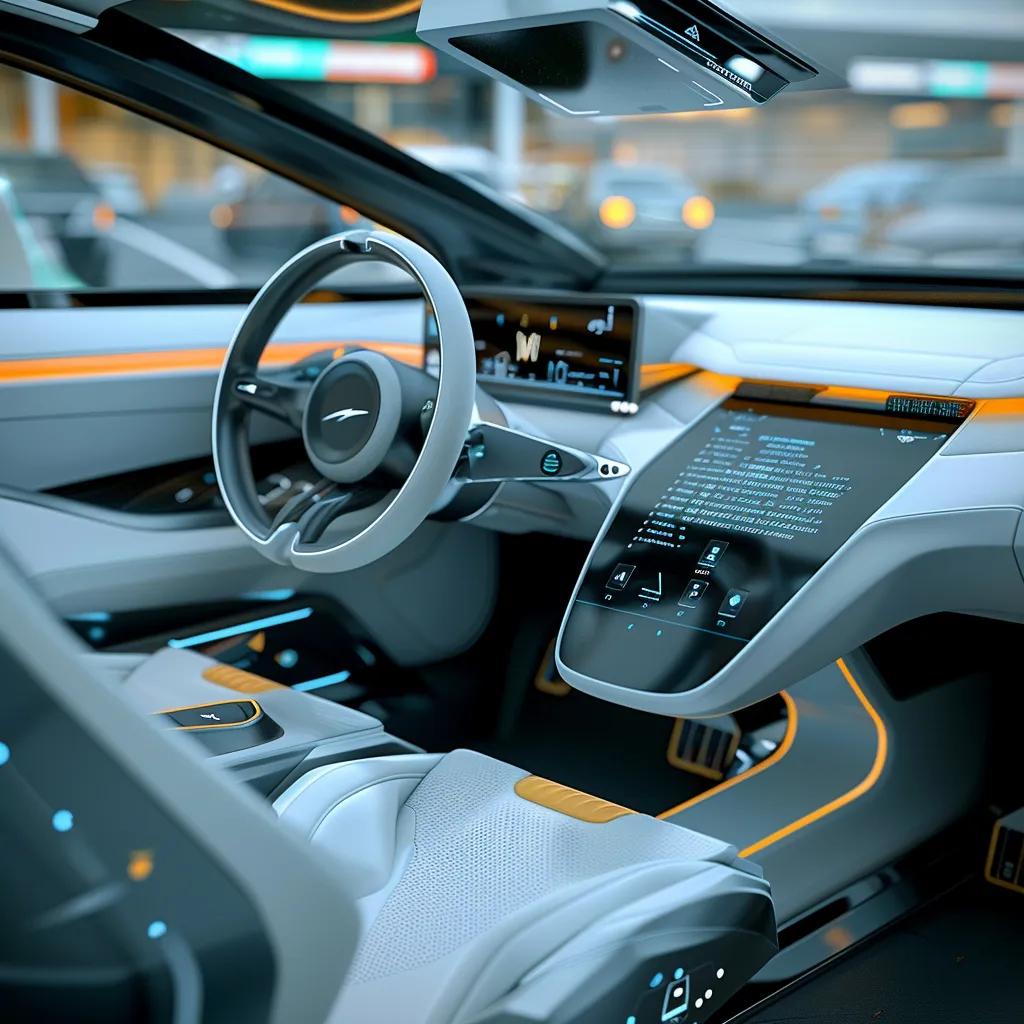
How AI Affects Cars: Exploring Features, Benefits, and Consumer Impact
Artificial intelligence transforms modern automobiles by combining sensors, algorithms, and connectivity to improve safety, convenience, and efficiency from the driver’s seat onward. In this guide, you’ll discover the core AI technologies powering autonomy, how AI-driven systems prevent collisions, the role of connected car features in personalizing your ride, and strategies for predictive maintenance—all while learning where to shop smart car accessories on Otto.com. We’ll cover:
- Key AI technologies shaping today’s vehicles
- Advanced Driver-Assistance Systems (ADAS) for enhanced safety
- Connected car innovations that elevate comfort and control
- AI’s impact on performance, maintenance, and manufacturing
- Ethical, privacy, and regulatory considerations
- AI-powered accessories you can buy on Otto.com
- Future trends driving smart mobility forward
By the end, you’ll understand exactly how AI affects cars—and where to find the right products to experience these benefits yourself.
What Are the Key AI Technologies Transforming Modern Cars?
AI technologies in cars use data-driven algorithms and sensor inputs to interpret the environment, make decisions, and enhance both safety and convenience. These technologies underpin autonomous driving, predictive maintenance, infotainment personalization, and more by processing camera, radar, LiDAR, and telematics data in real time to deliver actionable insights.
Which AI Types Power Autonomous and Connected Vehicles?
Deep learning, computer vision, and reinforcement learning form the AI backbone of self-driving and connected vehicles. Convolutional neural networks (CNNs) process camera feeds to detect lanes and pedestrians, while reinforcement learning algorithms optimize driving strategies through simulation-based training. Together, they enable cars to navigate complex scenarios and adapt to new conditions.
AI and Autonomous Vehicle Technologies
Artificial intelligence is a key component in the development of autonomous vehicles, enabling them to perceive their surroundings, make decisions, and navigate complex environments. Deep learning, computer vision, and reinforcement learning are fundamental AI technologies used in self-driving cars.
This research provides a foundational understanding of the deep learning techniques that are central to the AI systems discussed in the article.
How Do Sensors Like LiDAR and Radar Enable AI in Cars?
LiDAR and radar sensors scan the vehicle’s surroundings to produce high-resolution maps and object-detection data, which AI algorithms fuse for real-time decision-making.
Below is a comparison of core sensor attributes:
What Machine Learning Algorithms Drive Car Intelligence?
Key algorithms include:
- Supervised learning models for object detection and classification
- Unsupervised learning for anomaly detection in sensor data
- Reinforcement learning for path planning and adaptive cruise control
By applying these techniques, vehicles continuously improve perception accuracy and decision-making efficiency, making your drive safer and more intuitive.
How Does AI Enhance Car Safety Through Advanced Driver-Assistance Systems (ADAS)?
AI-powered ADAS features use sensor fusion and predictive analytics to anticipate hazards and support the driver, reducing collision risk and improving overall road safety. These systems monitor surroundings, alert drivers to potential dangers, and even intervene when necessary.
Advanced Driver-Assistance Systems (ADAS)
ADAS features, such as adaptive cruise control, lane keeping assist, and automatic emergency braking, use AI to enhance vehicle safety by monitoring the environment and assisting the driver. These systems use sensor fusion and predictive analytics to anticipate hazards and reduce collision risks.
This source provides insights into the safety features and technologies discussed in the article, specifically focusing on the role of AI in enhancing vehicle safety.
What Are the Main ADAS Features Powered by AI?
Below is an EAV breakdown of core AI-driven ADAS features:
How Do AI Systems Improve Collision Avoidance and Driver Monitoring?
AI collision-avoidance systems analyze up to 360° of data from cameras, radar, and ultrasonic sensors to predict potential impacts and engage emergency brakes when drivers cannot react fast enough. Simultaneously, driver-monitoring cameras track eye movement and head position to detect drowsiness or distraction, issuing alerts or even gently steering the car back into lane when necessary. This integrated approach reduces accident rates and keeps everyone on the road safer.
What Levels of ADAS Are Common in Today’s Vehicles?
Automakers implement varying ADAS sophistication across models:
Level 2 features are now widespread, with Level 3 gradually arriving on premium and electric models, offering partial hands-off driving under defined scenarios.
In What Ways Do Connected Car Technologies Use AI to Improve Driving Experience?
How Do AI Voice Assistants and Infotainment Systems Work in Cars?
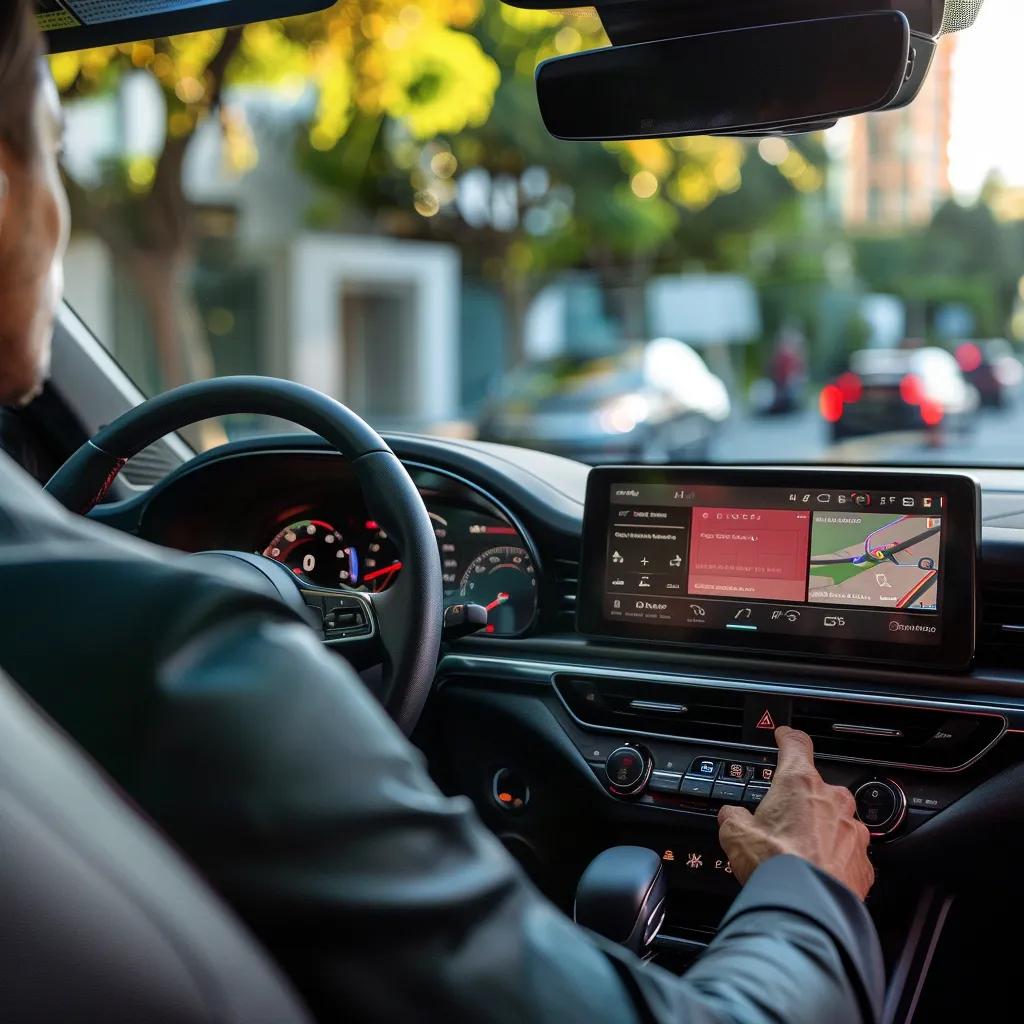
AI voice assistants process natural language commands via onboard microphones and cloud-based NLP engines to control navigation, climate, music, and phone calls. Infotainment systems leverage machine learning to recommend playlists, search nearby services, and adjust settings based on driver habits—all without taking your hands off the wheel.
What Is Vehicle-to-Everything (V2X) Communication and Its AI Role?
V2X communication uses AI to analyze data exchanged between vehicles, infrastructure, and pedestrians. By predicting traffic patterns and potential hazards from networked signals, AI can suggest optimal routes, adjust speed for platooning, or issue collision warnings well before obstacles appear in sight.
How Does AI Personalize the Connected Car Experience?
AI personalizes each journey by learning driver preferences—seat position, mirror angles, favorite radio stations—and automatically applying them when it recognizes your key fob or smartphone. It adapts climate control, navigation routes, and safety alerts to match individual profiles.
Explore smart infotainment systems on Otto.com to upgrade your ride: https://www.otto.com/kategorie/elektronik/auto-hifi-navigation/smart-car-geraete
How Is AI Used for Vehicle Performance, Maintenance, and Efficiency?
What Is Predictive Maintenance and How Does AI Reduce Downtime?
Predictive maintenance algorithms analyze telematics and sensor data to identify wear patterns in brakes, transmission, and engine components.
Key benefits include:
- Early detection of potential failures
- Scheduled service to avoid breakdowns
- Reduced repair costs through targeted interventions
Implementing diagnostic tools from Otto.com helps you monitor your car’s condition in real time: https://www.otto.com/kategorie/auto-motorrad/ersatzteile-pflege/diagnosegeraete
How Does AI Optimize Battery Management in Electric Vehicles?
AI battery-management systems balance charge and discharge cycles by analyzing cell temperatures, state-of-charge, and regenerative braking data. By optimizing these parameters, AI extends driving range, accelerates charging times, and preserves battery health—delivering more efficient and reliable electric mobility.
In What Ways Does AI Improve Car Design and Manufacturing?
Generative design algorithms use AI to simulate stress tests and material properties, producing lightweight yet robust components. In production lines, machine vision inspects welds and paint quality at high speed, ensuring consistent manufacturing standards and reducing defects. These innovations result in safer, more efficient vehicles delivered faster to market.
What Are the Ethical, Privacy, and Regulatory Challenges of AI in Cars?
How Does AI Impact Data Privacy and Cybersecurity in Vehicles?
Connected vehicles transmit GPS, biometric, and driving-behavior data that must be encrypted and anonymized. AI-based cybersecurity systems detect and block unauthorized access attempts in real time, protecting personal information and preventing remote hijacking of vehicle controls.
What Liability Issues Arise from Autonomous Driving AI?
When an AI-controlled car is involved in an accident, liability depends on software decision logs, sensor accuracy, and human override capabilities. Clear regulations now require manufacturers to document AI decision pathways and provide transparent incident reports that determine responsibility between driver and automaker.
How Are Regulations Shaping the Future of AI in Automotive?
Governments and standards bodies are defining testing protocols, safety benchmarks, and data-usage guidelines for AI in vehicles. Rules mandating functional safety certifications (ISO 26262) and cybersecurity compliance (UNECE WP.29) foster consumer trust and accelerate widespread deployment of autonomous and connected car technologies.
How Can Consumers Benefit from AI-Powered Car Accessories and Smart Technologies?
Which AI-Enabled Car Accessories Enhance Safety and Convenience?
- Smart dash cams with collision-warning alerts
- OBD-II devices that diagnose engine faults in real time
- Heads-up displays projecting navigation and speed data onto the windshield
- Voice-activated dash mounts that secure your phone hands-free
How Do Smart Car Devices Integrate with AI Systems?
Smart accessories connect via Bluetooth, Wi-Fi, or the OBD-II port to share data with smartphone apps and cloud platforms. AI engines analyze driving patterns and environmental data, delivering instant feedback or automatic adjustments for optimal performance and safety.
Where to Find AI-Powered Automotive Products on Otto.com?
Explore Otto’s curated selection of AI-driven car accessories here: https://www.otto.com/kategorie/auto-motorrad/auto-zubehoer
What Is the Future Outlook for AI in Cars and Smart Mobility?
What Emerging AI Trends Will Shape Autonomous Driving?
- Edge computing for ultra-low-latency decision-making
- 5G and C-V2X networks enabling high-speed data exchange
- Multi-sensor fusion with AI-based redundancy to improve reliability
How Will AI Continue to Transform Connected and Electric Vehicles?
Over-the-air software updates powered by AI will adapt vehicle behavior, security defenses, and user interfaces without requiring dealership visits. Machine-learning models will refine energy-management strategies based on aggregated fleet data, improving efficiency across electric fleets.
What Innovations Are Expected in AI-Driven Car Safety and Maintenance?
Predictive diagnostics will evolve into prescriptive maintenance, where AI not only flags issues but instantly orders replacement parts and schedules service appointments. Augmented-reality head-up displays will overlay hazard warnings and repair instructions directly onto your windshield, making both driving and upkeep more intuitive.
Autonomous vehicles, connected systems, and AI-driven maintenance tools are converging to deliver safer, more efficient, and personalized mobility. By understanding these advances and exploring AI-powered products on Otto.com, you can stay ahead of the curve and enjoy a smarter drive every time.
Autonomous systems leverage sensor fusion and deep learning to navigate complex environments with minimal human input. As regulations evolve and consumer demand grows, AI will unlock new levels of safety and personalization in every car. Otto’s marketplace connects you with the latest smart-car accessories to experience these innovations firsthand. Embrace the future of driving by exploring our AI-enabled automotive products today.
Frequently Asked Questions
What are the benefits of AI in vehicle maintenance?
AI enhances vehicle maintenance through predictive analytics, which can identify potential issues before they become serious problems. By analyzing data from various sensors, AI can forecast when components like brakes or engines may need servicing, allowing for timely interventions. This proactive approach not only reduces the risk of breakdowns but also lowers repair costs by addressing issues early. Additionally, AI can optimize maintenance schedules based on actual vehicle usage, ensuring that services are performed only when necessary, thus saving time and money for vehicle owners.
How does AI improve the driving experience in electric vehicles?
AI significantly enhances the driving experience in electric vehicles (EVs) by optimizing battery management and energy consumption. Through real-time analysis of driving patterns and environmental conditions, AI can adjust power distribution to maximize range and efficiency. It also enables features like regenerative braking, which recovers energy during deceleration. Furthermore, AI can personalize the driving experience by learning driver preferences for climate control and infotainment, ensuring a comfortable and enjoyable ride. These advancements contribute to a more efficient and user-friendly electric vehicle experience.
What impact does AI have on traffic management systems?
AI plays a transformative role in traffic management systems by analyzing vast amounts of data from various sources, including traffic cameras, sensors, and GPS data. This analysis allows for real-time traffic predictions and optimizations, helping to reduce congestion and improve flow. AI can dynamically adjust traffic signals based on current conditions, prioritize emergency vehicles, and provide drivers with optimal routing suggestions. By enhancing the efficiency of traffic systems, AI contributes to reduced travel times, lower emissions, and improved overall urban mobility.
How can AI assist in enhancing vehicle cybersecurity?
AI enhances vehicle cybersecurity by continuously monitoring network traffic and identifying unusual patterns that may indicate a cyber threat. Machine learning algorithms can analyze historical data to detect anomalies and respond to potential breaches in real time. Additionally, AI can automate software updates to ensure that vehicles are equipped with the latest security patches, reducing vulnerabilities. By employing advanced threat detection and response strategies, AI helps protect sensitive data and vehicle systems from unauthorized access and cyberattacks, ensuring safer driving experiences.
What are the implications of AI on insurance for autonomous vehicles?
The rise of AI in autonomous vehicles is reshaping the insurance landscape. Insurers are beginning to assess risk based on AI-driven data analytics rather than traditional metrics. This shift allows for more accurate pricing models that reflect the actual safety performance of autonomous systems. Additionally, liability issues are evolving, as determining fault in accidents involving AI-controlled vehicles can be complex. Insurers may need to develop new policies that account for the unique risks associated with AI technology, ultimately leading to more tailored coverage options for consumers.
How does AI facilitate the integration of smart city initiatives with vehicles?
AI facilitates the integration of smart city initiatives by enabling vehicles to communicate with urban infrastructure, such as traffic lights and public transport systems. This Vehicle-to-Everything (V2X) communication allows for real-time data exchange, improving traffic flow and reducing congestion. AI can analyze this data to optimize public transport schedules and enhance overall urban mobility. Furthermore, by integrating AI with smart city technologies, cities can create more efficient transportation networks that promote sustainability and improve the quality of life for residents.